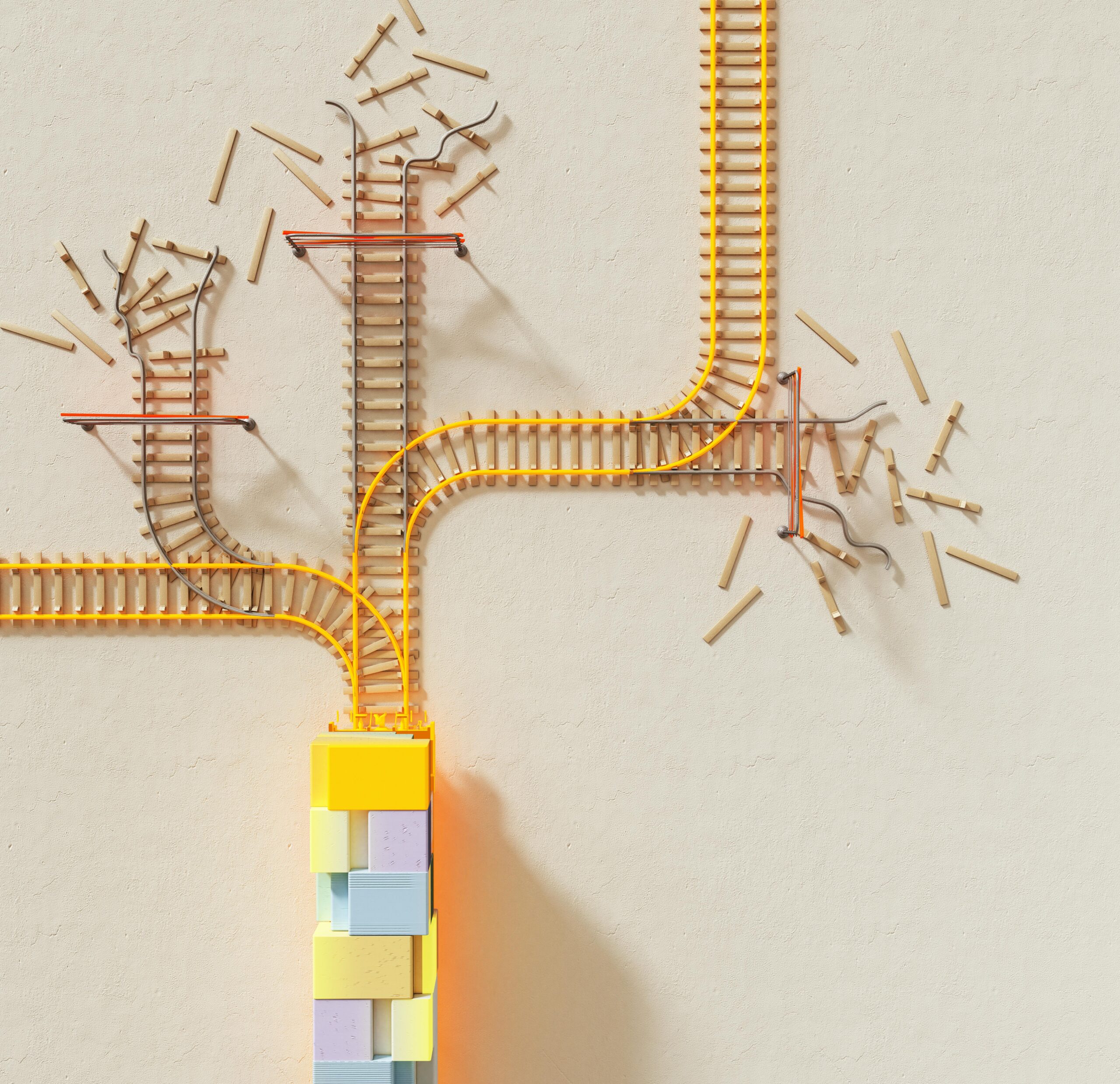
Understanding how shock waves travel through materials is transforming industries from sports equipment to aerospace engineering, offering unprecedented opportunities for innovation in safety and performance. 🚀

The Hidden Science Behind Every Impact
Every time a football player takes a hit, a car absorbs a collision, or a smartphone survives a drop, shock transmission pathways are at work. These invisible networks determine how energy travels through materials, structures, and biological systems. The science of shock transmission has evolved from simple observations to sophisticated computational models that predict and control energy transfer with remarkable precision.
Modern researchers have discovered that shock waves don’t simply travel in straight lines through materials. Instead, they follow complex pathways influenced by material composition, structural geometry, temperature, and countless other variables. This understanding has opened new frontiers in protective technology, allowing engineers to design systems that actively redirect harmful energy away from vulnerable areas.
The implications extend far beyond traditional impact protection. Industries ranging from construction to medical devices are leveraging shock transmission principles to create smarter, more responsive products. By mapping these pathways, scientists can now predict failure points before they occur and design materials that adapt to different impact scenarios in real-time.
How Shock Waves Actually Travel Through Materials ⚡
Shock transmission begins at the molecular level, where energy creates cascading disturbances through atomic structures. When an impact occurs, kinetic energy converts into compressive waves that propagate through the material at speeds determined by its elastic properties. These waves compress and rarify the material as they pass, creating stress patterns that can be measured and analyzed.
Different materials respond to shock waves in dramatically different ways. Metals typically transmit energy quickly and uniformly, while polymers and composites can absorb and dissipate energy through internal friction and deformation. Crystalline structures create predictable pathways, whereas amorphous materials scatter energy in multiple directions simultaneously.
The geometry of an object plays an equally critical role. Sharp corners concentrate stress, while curved surfaces distribute forces more evenly. Internal structures like honeycomb patterns or lattice frameworks create predetermined pathways that channel energy away from critical areas. Engineers exploit these principles to design components that fail gracefully under extreme conditions rather than catastrophically.
The Role of Material Properties in Energy Dissipation
Material scientists have identified several key properties that govern shock transmission behavior. Density affects how quickly waves propagate, while elasticity determines how much energy returns as the material rebounds. Viscosity introduces time-dependent behavior that transforms impact energy into heat through internal friction.
Advanced materials combine multiple properties to create synergistic effects. Composite structures layer materials with different impedances, causing shock waves to reflect, refract, and interfere with each other. This multi-barrier approach can reduce transmitted energy by orders of magnitude compared to homogeneous materials of equivalent weight.
Revolutionary Applications in Sports Protection Technology 🏈
The sports industry has become a testing ground for advanced shock transmission concepts. Modern helmets incorporate multi-density foams that respond differently to various impact velocities. Slow impacts compress soft outer layers, while high-speed collisions engage stiffer internal structures. This graduated response provides optimal protection across a wide range of scenarios.
Athletic footwear designers now map shock pathways from heel strike through the entire skeletal system. By placing specific materials at strategic locations, they can redirect impact forces away from vulnerable joints and toward major muscle groups better equipped to absorb energy. This biomechanical approach has reduced injury rates while improving athletic performance.
Protective padding for contact sports has evolved from simple foam to engineered systems with directional properties. These materials offer minimal resistance to tangential forces allowing natural movement, while providing maximum protection against perpendicular impacts. Some advanced systems use shear-thickening fluids that remain flexible during normal activity but instantly solidify when struck.
Automotive Safety Innovations Through Shock Management 🚗
Modern vehicles represent some of the most sophisticated shock transmission systems ever created. Crumple zones strategically direct collision energy away from passenger compartments through carefully designed deformation pathways. Engineers use finite element analysis to simulate thousands of crash scenarios, optimizing structures to manage energy transfer under diverse conditions.
Advanced materials like ultra-high-strength steels and carbon fiber composites allow designers to fine-tune local stiffness properties. Critical areas maintain structural integrity while surrounding zones progressively absorb energy through controlled failure. This approach has dramatically improved survival rates in high-speed collisions.
Suspension systems demonstrate how shock transmission principles apply to repetitive impacts. Dampers convert kinetic energy from road irregularities into heat, preventing oscillations from propagating through the vehicle structure. Active suspension systems now monitor shock pathways in real-time, adjusting damping characteristics thousands of times per second to optimize comfort and handling.
Next-Generation Airbag Systems
Contemporary airbag technology extends far beyond simple inflation. Multi-stage deployment systems time inflation rates to match collision severity, while venting mechanisms control deflation to manage energy transfer to occupants. Some systems incorporate materials with engineered tear patterns that create predictable failure modes, ensuring consistent performance across manufacturing variations.
Aerospace Engineering and Impact Resistance 🛩️
Aircraft structures must withstand extraordinary shock loads while minimizing weight. Bird strikes, hail impacts, and landing loads all create complex shock transmission scenarios. Aerospace engineers use sandwich panels with honeycomb cores that collapse progressively, absorbing energy while maintaining overall structural integrity.
Space applications face even more extreme requirements. Micrometeorite impacts traveling at orbital velocities carry enormous energy despite their small size. Multi-layer shielding systems space materials with different impedances to fragment and vaporize incoming particles, dissipating energy across multiple barriers before it reaches critical components.
Landing gear systems exemplify sophisticated shock management. Oleo-pneumatic struts combine hydraulic damping with gas compression to absorb landing impacts. The geometry of these systems creates force-displacement curves optimized for various landing conditions, from gentle touchdowns to hard impacts on damaged runways.
Biomechanics and Human Impact Protection 🏥
Understanding shock transmission through biological tissues has revolutionized trauma medicine and protective equipment design. Human bodies create complex pathways where energy propagates through bones, muscles, organs, and connective tissues. Each tissue type has unique mechanical properties that influence how impact forces distribute throughout the body.
Medical researchers use accelerometer arrays and high-speed imaging to map shock pathways during impacts. This data reveals how energy concentrates at tissue interfaces where material properties change abruptly. Protective equipment now targets these vulnerable transition zones with materials engineered to match biological impedances, reducing reflections and stress concentrations.
Concussion research has particularly benefited from shock pathway analysis. Scientists have discovered that rotational accelerations create shearing forces throughout brain tissue, causing more severe injuries than linear impacts alone. Modern helmet designs incorporate systems that decouple rotational and linear motion, managing each component through separate shock transmission pathways.
Prosthetics and Assistive Devices
Advanced prosthetic limbs now incorporate shock absorption systems that mimic biological energy management. Carbon fiber feet store and release energy during the gait cycle, while hydraulic joints dampen impact forces during heel strike. These systems analyze shock transmission patterns to provide natural movement while protecting residual limbs from repetitive stress injuries.
Construction and Seismic Protection Technologies 🏗️
Buildings in earthquake-prone regions rely on sophisticated shock transmission management. Base isolation systems decouple structures from ground motion using layers of rubber and steel that absorb seismic energy. These systems create mechanical filters that prevent high-frequency shock waves from reaching upper floors while allowing slow thermal expansions and settlements.
Tuned mass dampers represent active shock management in tall buildings. Heavy masses suspended within structures oscillate opposite to building motion, creating destructive interference that dissipates wind and seismic energy. Engineers calculate precise spring constants and damping coefficients to optimize performance across expected frequency ranges.
Advanced materials like shape-memory alloys enable self-healing structures. These materials can undergo large deformations during seismic events then return to their original configuration, dissipating energy through hysteretic behavior. Embedded sensors monitor shock pathways throughout structures, providing real-time damage assessment after earthquakes.
Consumer Electronics and Drop Protection 📱
Smartphone manufacturers invest heavily in shock transmission research. Modern devices must survive multiple drops onto hard surfaces while maintaining slim profiles. Engineers use impact simulation software to identify critical pathways where shock waves concentrate, then reinforce these areas with strategic material placement.
Display protection has evolved dramatically through understanding shock transmission. Gorilla Glass and similar materials combine surface compression with internal structure optimization to resist cracking. When impacts occur, these materials redirect energy laterally away from the impact point, distributing forces across larger areas.
Internal component mounting systems now function as shock isolation platforms. Rubber grommets and spring suspensions decouple sensitive electronics from the device chassis, allowing the outer structure to absorb impacts without transmitting damaging accelerations to circuit boards and batteries.
Advanced Materials Transforming Energy Transfer 🔬
Metamaterials represent the cutting edge of shock transmission control. These engineered structures exhibit properties not found in nature, including negative stiffness and frequency-dependent behavior. By arranging unit cells in specific patterns, designers create materials that actively redirect shock waves around protected volumes, functioning as acoustic cloaking devices.
Auxetic materials expand laterally when stretched, reversing typical material behavior. This property creates unique shock transmission characteristics where impacts cause materials to densify rather than thin, concentrating protective capacity exactly where needed. Applications range from blast protection to sports equipment.
Shear-thickening fluids transition from liquid to solid under impact, providing adaptive protection. These non-Newtonian materials flow freely during normal use but lock up when struck, creating instant armor. Researchers are developing next-generation formulations with faster response times and broader operating temperature ranges.
Nanomaterial Applications
Carbon nanotubes and graphene offer extraordinary strength-to-weight ratios that enable new shock transmission strategies. Their molecular structure creates pathways for rapid energy dissipation through phonon interactions. Composite materials incorporating these nanomaterials demonstrate impact resistance previously impossible at equivalent weights.
Computational Modeling and Prediction Systems 💻
Modern shock transmission research relies heavily on computational simulation. Finite element analysis divides structures into millions of elements, calculating stress and strain propagation through each during impact events. These simulations reveal shock pathways that would be impossible to measure experimentally, enabling optimization before physical prototyping.
Machine learning algorithms now predict shock transmission behavior from material properties and geometric parameters. Neural networks trained on thousands of simulations can instantly evaluate new designs, dramatically accelerating the development cycle. Some systems even suggest design modifications to optimize specific performance metrics.
Real-time monitoring systems embedded in critical structures track shock pathways during operation. Fiber optic sensors detect strain waves passing through materials, while accelerometer arrays measure vibrations at multiple locations. This data feeds algorithms that assess structural health and predict remaining service life based on accumulated damage.
Emerging Applications and Future Directions 🌟
Wearable technology is beginning to incorporate shock transmission monitoring. Smart clothing with embedded sensors could warn athletes of dangerous impact accumulation before injuries occur. Military applications include suits that actively stiffen in response to detected threats, providing adaptive protection based on real-time threat assessment.
Space elevator concepts require understanding shock transmission through cables thousands of kilometers long. Engineers must account for vibrations from wind, payload movements, and orbital dynamics. Active damping systems would inject controlled vibrations to cancel shock waves before they amplify into destructive oscillations.
Biotechnology researchers are exploring living materials that adapt their shock transmission properties through biological processes. Bacterial cellulose and other biological composites could grow custom shock absorption systems tailored to specific applications, then repair themselves when damaged.
Practical Implementation Strategies for Engineers 🔧
Implementing effective shock transmission management begins with thorough impact analysis. Engineers must identify all potential load cases, including magnitude, direction, frequency, and duration. This comprehensive understanding guides material selection and structural optimization decisions.
Multi-scale modeling approaches combine atomic-level simulations with continuum mechanics to bridge microscopic material behavior and macroscopic structural response. This technique reveals how molecular-level energy dissipation mechanisms scale up to affect component-level performance, enabling true materials-by-design approaches.
Validation testing remains essential despite advanced simulation capabilities. Instrumented impact tests using high-speed cameras, force plates, and distributed sensors provide data to verify computational models. Iterative refinement between simulation and testing accelerates convergence on optimal designs.

Transforming Industries Through Energy Control
The science of shock transmission pathways has matured from academic curiosity to practical engineering tool. Modern understanding enables designers to view materials and structures as programmable energy networks rather than passive components. This paradigm shift unlocks unprecedented control over how energy moves through systems during impacts.
Industries continue discovering new applications for shock transmission principles. From musical instruments where controlled energy transfer creates desired acoustic properties, to surgical tools where precise energy delivery improves outcomes, the breadth of applications grows constantly. Cross-pollination between disciplines accelerates innovation as techniques proven in one field transfer to others.
The future promises even greater advances as materials science, computational power, and sensing technology converge. Adaptive systems that learn from each impact, optimizing their response for subsequent events, are moving from research labs toward commercial reality. Self-healing materials that automatically repair damage to shock transmission pathways will extend service life while maintaining consistent performance.
Success in this field requires multidisciplinary collaboration. Materials scientists, mechanical engineers, computational experts, and domain specialists must work together, combining their unique perspectives. Organizations that foster this integration will lead the next wave of innovations in impact protection and energy transfer technology, creating products that are safer, more durable, and better performing than ever before.