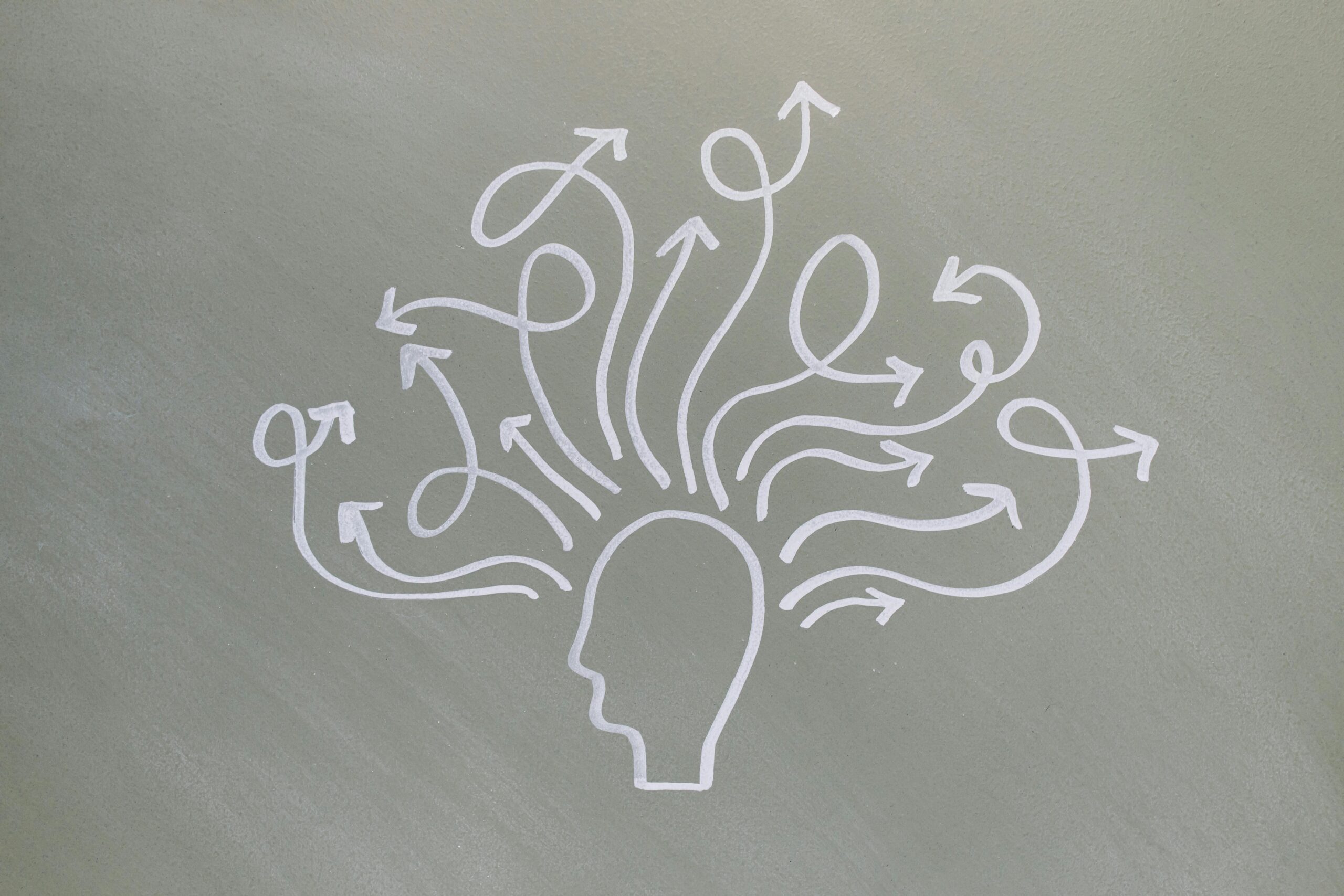
In today’s volatile business landscape, understanding risk underestimation models has become a critical survival skill for organizations seeking sustainable competitive advantage and resilience.

The global business environment has transformed dramatically over the past decade, accelerating at unprecedented rates through technological disruptions, geopolitical shifts, and unexpected crises. Traditional risk management approaches often fall short because they rely on historical data and conventional assumptions that may no longer apply in our rapidly changing world.
Risk underestimation—the tendency to downplay potential threats or miscalculate their probability and impact—has led to countless corporate failures, financial crises, and strategic blunders. Yet paradoxically, the same models designed to prevent these failures can become powerful tools for identifying opportunities that competitors miss entirely.
🎯 Understanding the Landscape of Risk Underestimation
Risk underestimation occurs when decision-makers fail to accurately assess the probability or magnitude of negative events. This cognitive bias affects everyone from individual investors to multinational corporations, often with devastating consequences. The 2008 financial crisis, the COVID-19 pandemic’s business impact, and numerous corporate bankruptcies all share a common thread: critical risks were systematically underestimated.
What makes risk underestimation particularly dangerous is its invisibility. Unlike obvious threats that trigger immediate defensive responses, underestimated risks lurk beneath the surface, creating a false sense of security. Organizations become vulnerable precisely when they believe they are most secure.
Modern risk underestimation models work by identifying where traditional risk assessment falls short. They incorporate behavioral economics, complexity theory, and advanced statistical methods to reveal blind spots in conventional analysis. These models don’t just measure what we know—they illuminate what we don’t know we don’t know.
The Psychology Behind Underestimating Risk
Human psychology plays a central role in risk underestimation. Several cognitive biases systematically distort our perception of threats:
- Optimism bias: The tendency to believe negative events are less likely to affect us personally or professionally
- Recency bias: Overweighting recent experiences while dismissing historical patterns
- Availability heuristic: Judging probability based on how easily examples come to mind
- Groupthink: Collective pressure to conform suppresses dissenting risk assessments
- Confirmation bias: Seeking information that validates existing beliefs while ignoring contradictory evidence
Organizations that master risk underestimation models actively counteract these biases through structured processes, diverse perspectives, and devil’s advocate approaches that challenge comfortable assumptions.
📊 Building Robust Risk Underestimation Models
Effective risk underestimation models require a multi-layered approach that combines quantitative analysis with qualitative insights. The most sophisticated organizations don’t rely on a single methodology but instead deploy complementary frameworks that cross-validate findings and reveal hidden vulnerabilities.
Quantitative Foundations: Beyond Traditional Probability
Traditional probability models assume normal distributions and independent events—assumptions that rarely hold true in complex, interconnected systems. Advanced risk underestimation models incorporate fat-tailed distributions, network effects, and cascade scenarios that better reflect real-world dynamics.
Monte Carlo simulations have become increasingly valuable for exploring potential outcomes across thousands of scenarios. By running extensive simulations that incorporate uncertainty in multiple variables simultaneously, organizations can identify low-probability, high-impact events that standard analysis overlooks.
Bayesian approaches offer another powerful tool by continuously updating risk assessments as new information emerges. Rather than treating risk as static, Bayesian models create living assessments that evolve with changing circumstances, helping organizations stay ahead of emerging threats.
Stress Testing and Scenario Planning
Stress testing pushes systems beyond normal operating parameters to identify breaking points. Financial institutions learned the value of rigorous stress testing after 2008, but these principles apply across industries. Effective stress tests don’t just model mild disruptions—they explore extreme scenarios that make stakeholders uncomfortable.
Scenario planning complements stress testing by creating detailed narratives about potential futures. Rather than predicting a single outcome, scenario planning explores multiple plausible pathways, helping organizations prepare for various contingencies. The most valuable scenarios often combine factors that seem unrelated at first glance but could intersect in consequential ways.
🔍 Implementing Risk Models in Your Organization
Theory means little without practical implementation. Translating risk underestimation models into operational reality requires cultural change, technological infrastructure, and sustained leadership commitment.
Creating a Risk-Aware Culture
Culture eats strategy for breakfast, and nowhere is this more true than in risk management. Organizations with effective risk cultures encourage employees at all levels to identify and escalate concerns without fear of retribution. Psychological safety becomes paramount—team members must feel comfortable challenging prevailing assumptions and raising uncomfortable possibilities.
Leading organizations institutionalize dissent through formal mechanisms like pre-mortem analyses, where teams imagine a project has failed spectacularly and work backward to identify what went wrong. This exercise surfaces risks that traditional forward-looking planning misses entirely.
Regular red team exercises, where designated groups attempt to exploit vulnerabilities and challenge strategic plans, keep organizations honest about their exposure. These adversarial approaches counteract the natural human tendency toward optimism and conformity.
Technology Infrastructure for Risk Management
Modern risk underestimation models demand substantial computational resources and sophisticated data analytics capabilities. Organizations need integrated platforms that aggregate data from diverse sources, apply advanced analytical techniques, and present findings in actionable formats.
Artificial intelligence and machine learning are transforming risk assessment by identifying patterns in vast datasets that human analysts cannot perceive. These systems excel at detecting anomalies, predicting emerging threats, and continuously learning from new information.
However, technology alone proves insufficient. The most dangerous failures occur when organizations blindly trust algorithmic outputs without understanding underlying assumptions and limitations. Human judgment remains essential for interpreting results, questioning methodologies, and making final decisions.
💡 Strategic Advantages of Mastering Risk Underestimation
Organizations that excel at identifying underestimated risks gain multiple competitive advantages beyond merely avoiding disasters. These capabilities create opportunities for strategic differentiation and value creation.
Turning Risk Intelligence into Competitive Advantage
Superior risk assessment enables organizations to move confidently into opportunities that competitors avoid due to perceived dangers. When you understand risks that others underestimate, you can also recognize where others overestimate risks, creating asymmetric opportunities.
This dynamic plays out repeatedly in financial markets, where investors with better risk models earn excess returns by correctly pricing assets that the broader market misvalues. The same principle applies to strategic business decisions about market entry, product development, and operational investments.
Companies like Amazon have built empires partly through superior risk assessment. While competitors saw insurmountable obstacles in areas like cloud computing and logistics, Amazon recognized that certain risks were more manageable than conventional wisdom suggested, allowing them to establish dominant positions before others entered the market.
Enhanced Resilience and Adaptability
Organizations that understand their true risk exposure build appropriate resilience without over-investing in unnecessary precautions. This balanced approach maintains flexibility and preserves resources for productive opportunities rather than excessive hedging.
Resilience extends beyond financial buffers to include operational flexibility, supply chain diversity, and organizational adaptability. Companies with robust risk underestimation models stress-test these capabilities regularly, identifying weaknesses before crises expose them.
The COVID-19 pandemic separated resilient organizations from fragile ones. Companies that had genuinely assessed pandemic risk—rather than dismissing it as improbable—maintained operations while competitors scrambled. This preparedness translated directly into competitive advantage during the crisis and accelerated recovery afterward.
🌐 Real-World Applications Across Industries
Risk underestimation models prove valuable across diverse sectors, though implementation details vary by industry context and regulatory environment.
Financial Services: Lessons from Crisis
The financial sector has invested heavily in risk modeling since the 2008 crisis, developing sophisticated approaches to credit risk, market risk, and operational risk. Value-at-Risk (VaR) models, despite limitations, provide standardized frameworks for comparing exposures across different asset classes and portfolios.
However, 2008 taught financial institutions that models based on recent historical data catastrophically underestimate tail risks. Contemporary approaches incorporate longer time horizons, stress scenarios beyond historical experience, and explicit accounting for model uncertainty itself.
Healthcare: Managing Clinical and Operational Uncertainty
Healthcare organizations face unique risk challenges combining patient safety, regulatory compliance, and operational complexity. Risk underestimation in healthcare can literally prove fatal, making robust models essential rather than optional.
Leading healthcare systems apply risk stratification models to predict patient deterioration, identify potential adverse events, and allocate resources efficiently. These models incorporate clinical data, social determinants of health, and operational factors to provide holistic risk assessments that improve outcomes while controlling costs.
Technology and Cybersecurity
Technology companies confront rapidly evolving risk landscapes where yesterday’s secure systems become today’s vulnerabilities. Cybersecurity risk assessment has become perhaps the most dynamic application of risk underestimation models, as attackers continuously develop new techniques.
Effective cybersecurity risk models assume breach inevitability rather than prevention certainty. This mindset shift—from “if” to “when”—fundamentally changes defensive strategies toward resilience, rapid detection, and containment rather than perimeter security alone.
⚡ Common Pitfalls and How to Avoid Them
Even sophisticated risk underestimation models fail when organizations fall into predictable traps. Awareness of these pitfalls helps organizations maintain effectiveness over time.
Model Over-Reliance and False Precision
Models provide valuable insights but never capture complete reality. Organizations sometimes mistake model outputs for objective truth, forgetting the assumptions, simplifications, and uncertainties embedded within every analytical framework.
False precision—reporting risk estimates to multiple decimal places—creates an illusion of accuracy that encourages dangerous overconfidence. Effective risk communication acknowledges uncertainty ranges and model limitations explicitly, maintaining appropriate humility about what we truly know.
Failure to Update Models
Risk landscapes change continuously, but models often remain static. Organizations must establish formal review cycles that reassess assumptions, incorporate new data, and adapt methodologies to changing circumstances.
The most dangerous phrase in risk management remains “that’s how we’ve always done it.” Yesterday’s accurate model becomes today’s dangerous liability when conditions shift but the model remains unchanged.
Ignoring Qualitative Signals
Quantitative models excel at analyzing structured data but often miss qualitative signals that indicate emerging risks. Employee concerns, customer complaints, supplier difficulties, and cultural shifts frequently precede quantifiable risk metrics.
Organizations need complementary approaches that capture these softer signals and integrate them with quantitative analyses. Front-line employees often perceive emerging problems before they appear in formal metrics, making bottom-up risk identification processes essential.
🚀 The Future of Risk Assessment
Risk underestimation models continue evolving as technology advances and our understanding of complex systems deepens. Several emerging trends promise to reshape how organizations approach uncertainty.
Artificial intelligence is moving beyond pattern recognition toward causal inference, helping organizations understand not just correlations but actual cause-and-effect relationships. This capability dramatically improves risk assessment by identifying intervention points where actions can meaningfully reduce exposure.
Network analysis and complexity science are revealing how risks propagate through interconnected systems. These approaches help organizations understand second-order and third-order effects that traditional analysis misses, providing more complete pictures of potential cascades.
Real-time risk monitoring enabled by Internet of Things sensors, continuous data streams, and cloud computing allows organizations to track evolving conditions continuously rather than relying on periodic assessments. This shift toward continuous intelligence transforms risk management from periodic exercise to ongoing capability.
🎓 Building Organizational Capability
Developing genuine expertise in risk underestimation requires sustained investment in people, processes, and tools. Organizations cannot simply purchase a software package or hire a consultant and expect transformation overnight.
Training programs should develop both technical skills in quantitative methods and judgment capabilities for interpreting results and making decisions under uncertainty. The best risk professionals combine analytical rigor with business understanding and healthy skepticism.
Cross-functional collaboration proves essential because comprehensive risk assessment requires diverse perspectives. Finance sees different risks than operations; technology identifies different vulnerabilities than human resources. Integrating these viewpoints creates more complete risk pictures.
Leadership engagement makes the difference between risk management theater and genuine capability. When executives actively participate in risk discussions, challenge assumptions, and reward employees who identify problems early, organizations build cultures where risk intelligence thrives.

🌟 Transforming Uncertainty into Strategic Clarity
Mastering risk underestimation models ultimately transforms how organizations approach the future. Rather than viewing uncertainty as something to fear or ignore, sophisticated organizations recognize it as the environment where competitive advantages are built and defended.
The organizations that thrive over coming decades will distinguish themselves through superior ability to navigate uncertainty, identify risks others miss, and seize opportunities others fear. This capability doesn’t emerge from sophisticated algorithms alone but from organizational cultures that value honest risk assessment, challenge comfortable assumptions, and maintain appropriate humility about the limits of human knowledge.
Risk underestimation models provide powerful tools, but tools alone never suffice. Success requires combining analytical rigor with practical wisdom, quantitative precision with qualitative judgment, and technological capability with human insight. Organizations that achieve this balance don’t merely survive uncertainty—they harness it as a source of sustainable competitive advantage.
The journey toward risk mastery never truly ends. As soon as organizations become comfortable with current models and methods, the world shifts again, creating new challenges and demanding continued adaptation. This perpetual evolution defines modern organizational life, separating adaptive enterprises from those that eventually succumb to risks they failed to recognize or adequately prepare for.
Your organization’s future depends significantly on how well you understand and manage risks that conventional wisdom underestimates. The question isn’t whether you’ll face uncertainty—that’s guaranteed. The question is whether you’ll develop the capabilities needed to navigate it successfully, turning potential threats into strategic opportunities that propel your organization forward while competitors stumble over obstacles they never saw coming.