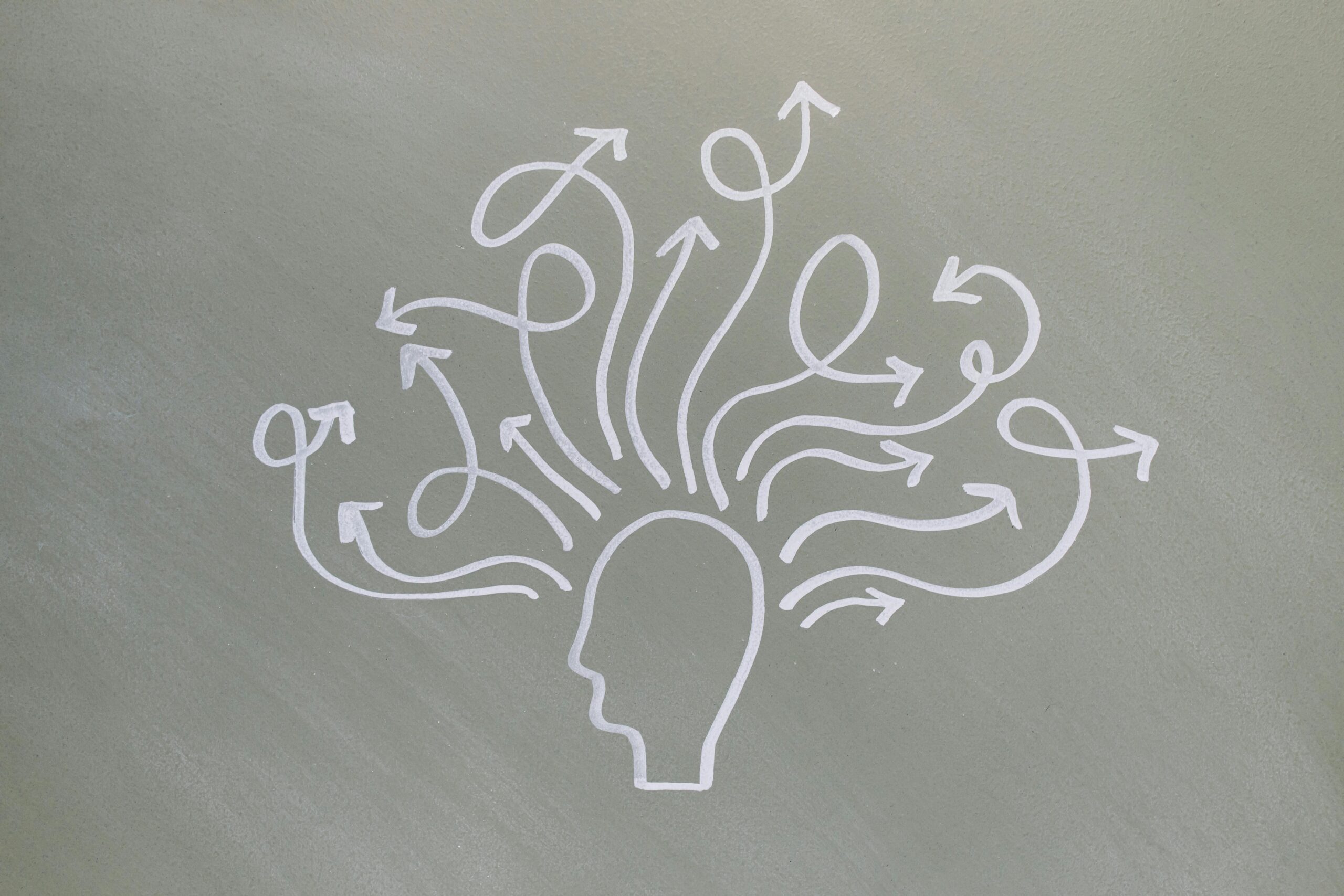
Every decision we make is quietly influenced by the accumulation of countless small biases, shaping our judgments in ways we rarely recognize.

Our minds operate like sophisticated recording devices, constantly processing information, cataloging experiences, and forming patterns that guide future choices. Yet this remarkable cognitive machinery comes with a hidden cost: the gradual accumulation of biases that distort our perception of reality. These biases don’t arrive as dramatic revelations but rather as whispers—subtle inclinations that compound over time, ultimately steering our most significant decisions in directions we might not consciously choose.
Understanding how bias accumulation works isn’t just an academic exercise; it’s essential for anyone seeking to make better decisions in personal life, professional settings, or societal contexts. The implications stretch across every domain where human judgment matters: hiring practices, medical diagnoses, investment strategies, legal proceedings, and even our daily interactions with others.
🧠 The Architecture of Bias Formation
Bias doesn’t materialize from nowhere. It emerges through a complex interplay of evolutionary programming, cultural conditioning, and personal experience. Our brains evolved to make rapid decisions with limited information—a survival mechanism that served our ancestors well when deciding whether a rustling bush contained predator or prey.
This cognitive efficiency came at a price. To process information quickly, our minds developed shortcuts called heuristics. These mental rules of thumb allow us to navigate complex environments without deliberating over every detail. However, what works for immediate survival doesn’t always serve us well in modern contexts where nuanced thinking matters.
The confirmation bias exemplifies this perfectly. Once we form an initial impression or belief, our minds preferentially seek information that confirms it while dismissing contradictory evidence. This isn’t conscious deception—it’s an automatic filtering process that happens beneath our awareness.
The Snowball Effect of Small Perceptions
Consider how a single interaction shapes subsequent encounters. You meet someone who reminds you subtly of a childhood friend you didn’t trust. That tiny association—perhaps they share a similar laugh or gesture—creates an imperceptible wariness. In your next conversation with them, you interpret their words slightly more negatively than you would otherwise.
This interpretation reinforces your initial unease. Over multiple interactions, each slightly colored by your growing negative perception, you build a comprehensive narrative about this person’s character. Eventually, your “intuition” tells you they’re untrustworthy, but that intuition is actually an accumulated bias born from an irrelevant association.
Multiply this process across hundreds of daily interactions, decisions, and judgments, and you begin to see how bias accumulation fundamentally shapes our worldview.
📊 Mapping the Bias Landscape
Researchers have identified dozens of cognitive biases, each contributing to the accumulation effect in distinct ways. Understanding the major categories helps us recognize when our judgment might be compromised.
Perception Biases: Filtering Reality
These biases affect how we interpret sensory information and experiences. The availability heuristic makes us overestimate the likelihood of events we can easily recall—usually because they’re recent, dramatic, or emotionally charged. After seeing news coverage of airplane accidents, people overestimate flight risks while underestimating the far greater dangers of automobile travel.
The anchoring effect demonstrates how initial information disproportionately influences subsequent judgments. In salary negotiations, the first number mentioned often becomes an anchor around which all other figures revolve, regardless of its relevance or accuracy.
Social Biases: Navigating Human Interactions
Our social nature generates its own set of biases. The halo effect causes us to assume that people who excel in one area must be competent in others—we presume attractive people are more intelligent, or successful businesspeople must be ethical leaders.
In-group bias makes us favor those we perceive as similar to ourselves while viewing out-group members with suspicion or negativity. This tribal thinking, once essential for group cohesion and survival, now fuels prejudice and discrimination across society.
Memory Biases: Rewriting the Past
Our memories aren’t faithful recordings but rather reconstructions influenced by current beliefs and emotions. The hindsight bias makes past events seem more predictable than they were, leading us to believe we “knew it all along.” This distorts our ability to learn from mistakes by creating false confidence in our predictive abilities.
Rosy retrospection causes us to remember the past more positively than we experienced it at the time, potentially leading us to repeat poor decisions because we’ve forgotten their actual consequences.
🔄 The Compound Interest of Cognitive Bias
Financial advisors often describe compound interest as the eighth wonder of the world—small amounts invested regularly grow exponentially over time. Bias accumulation follows a similar mathematical principle, except the returns are decidedly less wonderful.
Each biased perception or decision doesn’t exist in isolation. It influences the next judgment, which affects the one after that, creating an exponential growth pattern. A manager who unconsciously favors employees who share their communication style will gradually build a team of similar thinkers, each hiring decision reinforcing this homogeneity until the organization suffers from groupthink and lacks diverse perspectives.
In institutional settings, this accumulation becomes particularly dangerous. Criminal justice systems demonstrate how small biases at each decision point—from police stops to prosecution decisions to sentencing—compound to create massive disparities in outcomes for different demographic groups.
Algorithmic Amplification 🤖
Modern technology has introduced a new accelerant to bias accumulation. Machine learning algorithms trained on historical data inevitably absorb the biases embedded in that data. When these systems make decisions at scale—determining who sees job advertisements, who gets approved for loans, or who receives medical interventions—they can amplify historical biases at unprecedented speed and scope.
The feedback loops created by algorithmic systems are particularly insidious. An algorithm slightly biased against certain neighborhoods in loan approvals creates economic disadvantage in those areas, which generates data that “confirms” the original bias, leading the algorithm to become even more discriminatory over time.
💼 Professional Domains Where Bias Accumulation Matters Most
While bias affects all areas of life, certain professional contexts amplify its consequences, making awareness and mitigation particularly crucial.
Healthcare: Diagnostic Bias and Patient Outcomes
Medical professionals face constant diagnostic challenges where bias accumulation can have life-or-death consequences. Studies reveal that doctors spend less time with patients from certain demographic groups and are less likely to order appropriate tests, even when presenting symptoms are identical.
The availability heuristic leads physicians to diagnose conditions they’ve seen recently more readily than statistically more likely alternatives. Confirmation bias causes them to pursue evidence supporting their initial diagnostic impression while overlooking contradictory symptoms.
These individual biases accumulate across the healthcare system, contributing to significant disparities in health outcomes. Women experiencing heart attacks are less likely to receive appropriate emergency treatment because their symptoms don’t match the male-pattern presentation that medical training emphasizes.
Corporate Hiring and Advancement
Organizations consistently claim to value diversity and meritocracy, yet bias accumulation undermines these goals at every stage. Resume screening shows that identical qualifications receive different evaluations based on the perceived gender or ethnicity of applicants’ names.
Interview processes amplify these initial biases. Interviewers unconsciously ask different questions, interpret answers differently, and apply inconsistent standards based on characteristics unrelated to job performance. Over multiple interview rounds, these small differences compound into hiring decisions that systematically favor certain groups.
Promotion and compensation decisions follow similar patterns. Small differences in how contributions are recognized and valued accumulate over careers, creating dramatic disparities in advancement between equally qualified individuals.
Financial Decision-Making and Investment Strategies
Investment decisions showcase how bias accumulation undermines even supposedly rational, data-driven processes. The recency bias causes investors to overweight recent market performance, buying high after rallies and selling low after crashes—exactly the opposite of optimal strategy.
Overconfidence bias, strengthened by each seemingly successful decision, leads investors to take excessive risks and trade too frequently, destroying value through transaction costs and poor timing. Professional fund managers, despite extensive training, consistently underperform simple index funds partly because accumulated biases distort their decision-making.
🛡️ Strategies for Interrupting Bias Accumulation
Recognizing bias accumulation is necessary but insufficient. We need practical strategies to interrupt these patterns and make more objective decisions.
Implementing Decision-Making Protocols
Structured decision protocols reduce the opportunity for bias to influence outcomes. In hiring, using standardized interview questions with predetermined evaluation criteria limits subjective judgment. Medical checklists ensure that diagnosticians consider all relevant possibilities rather than anchoring on initial impressions.
These protocols work by making decision-making criteria explicit and forcing us to engage our deliberative, analytical thinking rather than relying on automatic, bias-prone intuition.
Diversifying Perspective Sources
Actively seeking perspectives different from our own helps counter confirmation bias and in-group favoritism. This means deliberately engaging with people who think differently, consuming diverse information sources, and creating organizational structures that ensure minority viewpoints receive serious consideration.
Devil’s advocate roles in decision-making groups, where someone formally argues against the prevailing view, help surface overlooked concerns. Pre-mortem exercises, where teams imagine a decision has failed and work backward to identify what went wrong, reveal blind spots that unchecked optimism would miss.
Creating Accountability Mechanisms
Transparency and accountability reduce bias by making decision-makers aware that their reasoning will be examined. When people know they’ll need to justify their decisions to others, particularly diverse others who might hold different perspectives, they engage in more careful, less biased thinking.
Data-driven reviews of aggregate decisions can reveal patterns invisible in individual cases. Analyzing hiring outcomes across hundreds of decisions might show statistical disparities that wouldn’t be apparent in any single hiring process, prompting necessary systemic corrections.
Practicing Cognitive Debiasing Techniques
Individual awareness and practice can reduce susceptibility to certain biases. Considering the opposite—deliberately thinking about why your initial judgment might be wrong—activates analytical thinking that counteracts automatic bias.
Taking the outside view, where you consider how similar situations typically turn out rather than focusing on the unique features of your case, helps overcome overconfidence and optimism bias. When planning a project, asking “how long do projects like this typically take?” provides better estimates than asking “how long will this specific project take?”
🌍 Societal Implications and Collective Action
Individual bias mitigation efforts are valuable, but systemic bias accumulation requires collective action and institutional reform. The compounding effects of bias create and maintain societal inequalities that individual awareness cannot fully address.
Educational systems that train future decision-makers must incorporate bias literacy as a core competency. Understanding cognitive bias shouldn’t be optional knowledge for psychologists but rather fundamental training for anyone in positions of authority or influence.
Policy interventions can interrupt accumulation patterns at scale. Blind audition processes revolutionized orchestra hiring by removing gender cues that had led to overwhelming male dominance. Similar approaches—removing identifying information from initial application reviews, using structured evaluation criteria, and diversifying decision-making bodies—can reduce bias across contexts.
Technology as Tool and Challenge
Technological solutions offer both promise and peril in addressing bias accumulation. Algorithmic decision systems can enforce consistency and eliminate certain human biases, but only when designed thoughtfully and monitored carefully for unintended consequences.
Bias detection tools using artificial intelligence can audit decisions for patterns suggesting discriminatory bias. These systems analyze outcomes across demographic groups, flagging disparities that warrant investigation. However, these tools themselves require careful design to avoid embedding new biases while attempting to eliminate old ones.
🔮 Building a Less Biased Future
Eliminating bias entirely is neither possible nor necessarily desirable—some automatic judgments keep us safe and efficient. The goal is recognizing when accumulated biases distort important decisions and implementing systems that promote more objective, equitable outcomes.
This requires cultural shifts that value intellectual humility over confidence, that reward people for identifying and correcting their biases rather than penalizing them for having biases in the first place. Organizations need to create psychological safety where acknowledging bias doesn’t threaten status or career prospects.
We must accept that reducing bias is an ongoing process, not a problem to be solved once and forgotten. As contexts change, new sources of bias emerge while old ones take different forms. Vigilance, systematic review, and willingness to adapt our approaches are essential for making sustained progress.
The accumulation of small perceptions into consequential decisions represents both a challenge and an opportunity. By understanding these mechanisms, we gain the ability to shape not just individual choices but the larger systems that govern our collective future. Every intervention that interrupts bias accumulation—no matter how small—contributes to more just, effective, and rational decision-making across society.
The path forward requires commitment at every level: individuals cultivating awareness and practicing debiasing techniques, organizations implementing structural safeguards and accountability mechanisms, and societies developing cultural norms and policies that prioritize fairness over convenience. The stakes are too high, and the consequences too far-reaching, for us to continue allowing unconscious biases to accumulate unchecked, silently steering our most important decisions toward outcomes we would never consciously choose.