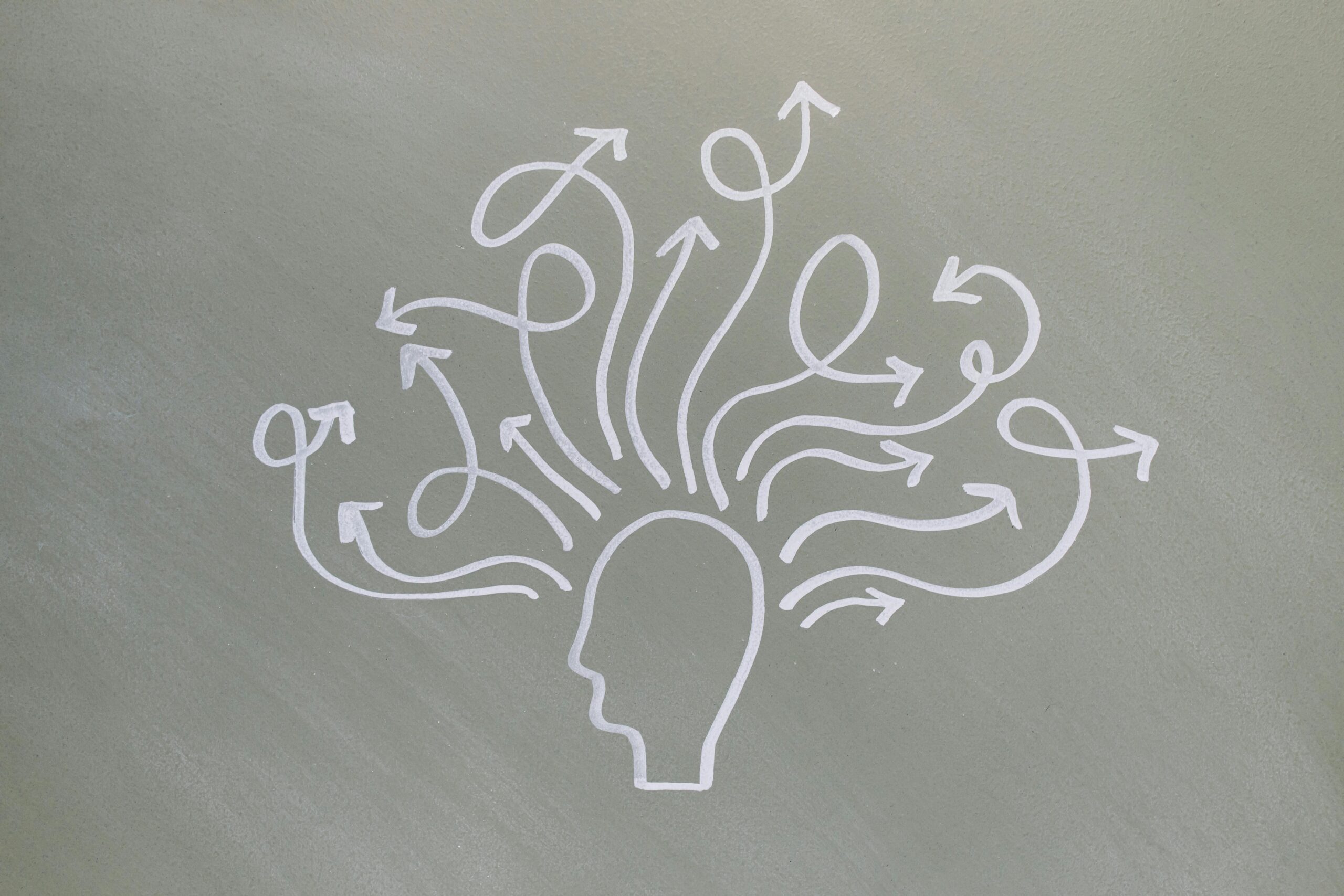
Our minds are masters of deception, constantly filtering reality through invisible lenses that confirm what we already believe to be true.

Every day, we make countless decisions—from choosing what news to read, to selecting political candidates, to determining which medical treatments to pursue. We pride ourselves on being rational creatures, capable of weighing evidence objectively and arriving at logical conclusions. Yet beneath this veneer of rationality lurks a powerful psychological phenomenon that systematically distorts how we process information, evaluate evidence, and ultimately understand the world around us.
Confirmation bias represents one of the most pervasive cognitive distortions affecting human judgment. This mental trap operates silently in the background of our consciousness, shaping perceptions and reinforcing beliefs without our awareness. Understanding how confirmation bias works isn’t just an academic exercise—it’s essential for making better decisions, building healthier relationships, and navigating an increasingly complex information landscape.
🧠 The Architecture of Self-Deception
Confirmation bias describes our tendency to search for, interpret, favor, and recall information in ways that confirm our preexisting beliefs or hypotheses. Rather than objectively evaluating evidence, we unconsciously become prosecutors building a case for what we already think is true. This cognitive shortcut evolved as a survival mechanism, allowing our ancestors to make quick decisions with incomplete information. In the modern world, however, it often leads us astray.
The phenomenon operates through several distinct mechanisms. First, we engage in selective exposure, gravitating toward information sources that align with our worldview while avoiding contradictory perspectives. Second, we interpret ambiguous evidence as supporting our existing beliefs—a process called biased assimilation. Third, we remember details that confirm our beliefs more readily than those that challenge them, creating a distorted memory landscape that reinforces our initial assumptions.
Psychologists have documented this bias across virtually every domain of human experience. Political partisans interpret identical economic data as supporting their preferred policies. Sports fans perceive referees as biased against their teams. Investors hold losing stocks too long, seeking information that justifies their initial purchase decision. The pattern repeats endlessly across contexts, revealing something fundamental about how human cognition functions.
The Historical Roots of a Modern Problem 📚
The formal identification of confirmation bias emerged from decades of psychological research, but the phenomenon itself is ancient. Greek historian Thucydides observed that “it is a habit of mankind to entrust to careless hope what they long for, and to use sovereign reason to thrust aside what they do not fancy.” This timeless observation captures the essence of confirmation bias: we are not neutral processors of information but motivated reasoners seeking to validate our preferences.
In the 1960s, psychologist Peter Wason conducted pioneering experiments demonstrating how people test hypotheses. His famous “2-4-6 task” revealed that participants overwhelmingly sought confirming evidence rather than attempting to falsify their theories. This preference for confirmation over disconfirmation became a cornerstone finding in cognitive psychology, spawning thousands of subsequent studies.
More recently, neuroscience research has illuminated the brain mechanisms underlying confirmation bias. Studies using functional MRI technology show that when people encounter information challenging their beliefs, regions associated with emotional processing and identity protection become activated. Conversely, belief-confirming information triggers reward centers, creating a neurochemical incentive to seek validation rather than truth.
Digital Echo Chambers: Confirmation Bias on Steroids 📱
The internet age has dramatically amplified confirmation bias’s effects. Social media platforms employ algorithms designed to maximize engagement by showing users content they’re likely to interact with—which typically means content confirming their existing views. This creates “filter bubbles” where people encounter increasingly homogeneous information ecosystems.
Facebook, Twitter, YouTube, and other platforms learn your preferences and serve content accordingly. If you watch conspiracy theory videos, the algorithm recommends more conspiracy content. If you engage with partisan political posts, you’ll see more partisan perspectives. This algorithmic curation creates the illusion that “everyone” shares your views, reinforcing beliefs through apparent consensus.
The consequences extend beyond individual psychology to affect democratic discourse and social cohesion. When citizens inhabit separate informational realities, finding common ground becomes nearly impossible. Political polarization intensifies as each side consumes media confirming their worst suspicions about opponents while rarely encountering persuasive counterarguments.
The Scientific Method as Antidote 🔬
Science represents humanity’s most successful attempt to overcome confirmation bias. The scientific method explicitly incorporates safeguards against this cognitive trap. Researchers must preregister hypotheses, use control groups, employ double-blind protocols, and subject findings to peer review—all designed to prevent confirmation bias from contaminating results.
The concept of falsifiability, introduced by philosopher Karl Popper, provides a crucial framework. Rather than seeking evidence that confirms theories, scientists should attempt to disprove them. Only theories that survive rigorous attempts at falsification merit confidence. This counterintuitive approach runs against our natural inclinations but produces reliable knowledge.
Yet even scientists remain vulnerable to confirmation bias. Publication bias favors positive results, leaving file drawers full of null findings. Researchers sometimes unconsciously analyze data in ways that support their hypotheses. The replication crisis affecting psychology, medicine, and other fields partly stems from confirmation bias operating within scientific institutions themselves.
Real-World Consequences: When Bias Becomes Dangerous ⚠️
Confirmation bias isn’t merely an abstract psychological curiosity—it produces concrete harms across multiple domains. In medicine, doctors who prematurely settle on a diagnosis may overlook contradictory symptoms, leading to misdiagnosis and improper treatment. Studies show that physicians given the same patient information reach different conclusions depending on initial diagnostic hunches.
Criminal justice provides another sobering example. Once investigators develop a theory about a suspect, confirmation bias can lead them to overlook exculpatory evidence while emphasizing incriminating details. Wrongful convictions frequently involve tunnel vision, where authorities become convinced of guilt early and interpret all subsequent evidence through that lens.
Business decisions suffer similarly. Entrepreneurs fall in love with their ideas, seeking information confirming market demand while dismissing warning signs. Investors hold failing positions too long, consuming media that rationalizes their decisions. Corporate cultures can develop collective confirmation bias, dismissing threats and overestimating competitive advantages until reality forces recognition—often too late.
Relationship Dynamics and Personal Conflicts 💔
Confirmation bias powerfully affects interpersonal relationships. Once we form impressions of people, we unconsciously seek evidence confirming those impressions. If you decide someone is untrustworthy, you’ll notice instances supporting that judgment while overlooking contradictory behavior. This creates self-fulfilling prophecies where initial impressions become entrenched regardless of actual evidence.
Conflicts escalate partly because each party selectively remembers grievances while forgetting their own transgressions. Couples in troubled relationships increasingly interpret neutral behaviors negatively, building cases against each other. Workplace disputes follow similar patterns, with colleagues constructing narratives that cast themselves as victims and opponents as villains.
The remedy involves consciously practicing “steel-manning”—constructing the strongest possible version of opposing viewpoints rather than attacking weak caricatures. This requires intellectual humility and genuine curiosity about alternative perspectives. Couples therapy often involves helping partners recognize how confirmation bias distorts their perceptions of each other’s intentions and behaviors.
Strategies for Breaking Free From the Trap 🎯
Recognizing confirmation bias doesn’t automatically neutralize it—awareness alone proves insufficient. However, deliberate strategies can reduce its influence on your thinking and decision-making:
- Actively seek disconfirming evidence: Before making important decisions, deliberately search for information challenging your preferred conclusion. Ask “what would change my mind?” and pursue those answers.
- Engage with steel-man arguments: Find the most sophisticated versions of opposing viewpoints rather than convenient strawmen. Seek out intelligent advocates for positions you disagree with.
- Use precommitment strategies: Decide in advance what evidence would change your mind, creating accountability before emotions become invested in particular conclusions.
- Diversify information sources: Deliberately consume media across the political and ideological spectrum. Set a rule: for every opinion piece confirming your views, read one challenging them.
- Practice intellectual humility: Cultivate comfort with uncertainty. Replace “I’m right” with “based on current evidence, I tentatively believe…” This linguistic shift creates psychological space for updating beliefs.
- Establish decision journals: Document your reasoning when making predictions or decisions. Later review reveals how confirmation bias distorted your thinking in ways you couldn’t see in the moment.
- Seek critical feedback: Identify people who will honestly challenge your thinking and create safe spaces for them to do so. Reward dissent rather than punishing it.
The Paradox of Awareness: Why Smart People Fall Hardest 🎓
Counterintuitively, intelligence and education don’t protect against confirmation bias—they sometimes make it worse. Highly intelligent people possess greater ability to construct sophisticated rationalizations for their beliefs. They’re better equipped to find supportive evidence and dismiss contradictions, making their confirmation bias more resilient rather than less.
Studies on politically motivated reasoning demonstrate this pattern clearly. When presented with mathematical problems framed in political terms, numerate individuals showed greater bias than less numerate peers. Their mathematical skills were deployed not to find correct answers but to reach politically convenient conclusions. Intelligence became a tool for self-deception rather than truth-seeking.
This suggests that combating confirmation bias requires not just cognitive capacity but motivational orientation. We must genuinely value truth over comfort, accuracy over validation. This proves psychologically difficult because beliefs often connect to identity, social belonging, and emotional security. Changing your mind feels threatening when beliefs define who you are.
Building Systems That Counter Human Nature 🏗️
Since individual willpower proves insufficient against confirmation bias, we need institutional and technological solutions. Prediction markets aggregate diverse perspectives and reward accuracy, creating incentives for honest assessment rather than motivated reasoning. Adversarial collaboration brings together researchers with opposing views to jointly design studies both consider fair tests of competing theories.
Some organizations implement “red teams” tasked with identifying flaws in proposed strategies. These devil’s advocates receive explicit license to challenge consensus views, counteracting groupthink and collective confirmation bias. The intelligence community increasingly uses structured analytic techniques designed to surface hidden assumptions and consider alternative hypotheses.
Technology could help if designed appropriately. Rather than algorithmic filter bubbles, platforms might intentionally expose users to quality content challenging their views. Browser extensions exist that flag partisan sources and recommend balanced perspectives. Fact-checking tools provide reality checks on claims circulating through social networks.

The Path Forward: Embracing Cognitive Humility 🌅
Confirmation bias will never be completely eliminated—it’s woven too deeply into human cognition. But we can learn to work with our cognitive limitations rather than pretending they don’t exist. This begins with radical honesty about our own fallibility and systematic vulnerability to self-deception.
The most epistemically virtuous individuals aren’t those with the strongest convictions but those most willing to update beliefs when evidence demands it. They track their prediction accuracy, celebrate discovering they were wrong, and build social environments that reward rather than punish intellectual honesty. They distinguish confidence from certainty, holding beliefs provisionally while remaining open to revision.
Moving forward requires both individual and collective effort. Personally, we must cultivate habits of intellectual humility and active open-mindedness. Institutionally, we need systems that counteract rather than amplify our cognitive biases. Culturally, we should celebrate nuance over certainty, complexity over simplicity, and updating over doubling down.
The mind’s trap of confirmation bias will always threaten to distort our perception of reality. But through awareness, deliberate practice, and well-designed systems, we can loosen its grip. The result isn’t perfect objectivity—an impossible standard—but rather less distorted vision and better calibrated beliefs. In a world of complex challenges requiring accurate understanding, that improvement might make all the difference between wisdom and delusion, between productive collaboration and destructive polarization, between decisions that serve us well and those that lead us astray.
The choice ultimately comes down to what we value more: the comfort of confirmation or the often-uncomfortable truth. Every day presents opportunities to practice choosing truth—to actively seek contradictory evidence, to genuinely engage opposing viewpoints, to update beliefs when warranted. These small acts of cognitive courage, repeated over time, reshape not just individual minds but collective understanding. The trap remains, but we need not stay caught within it.