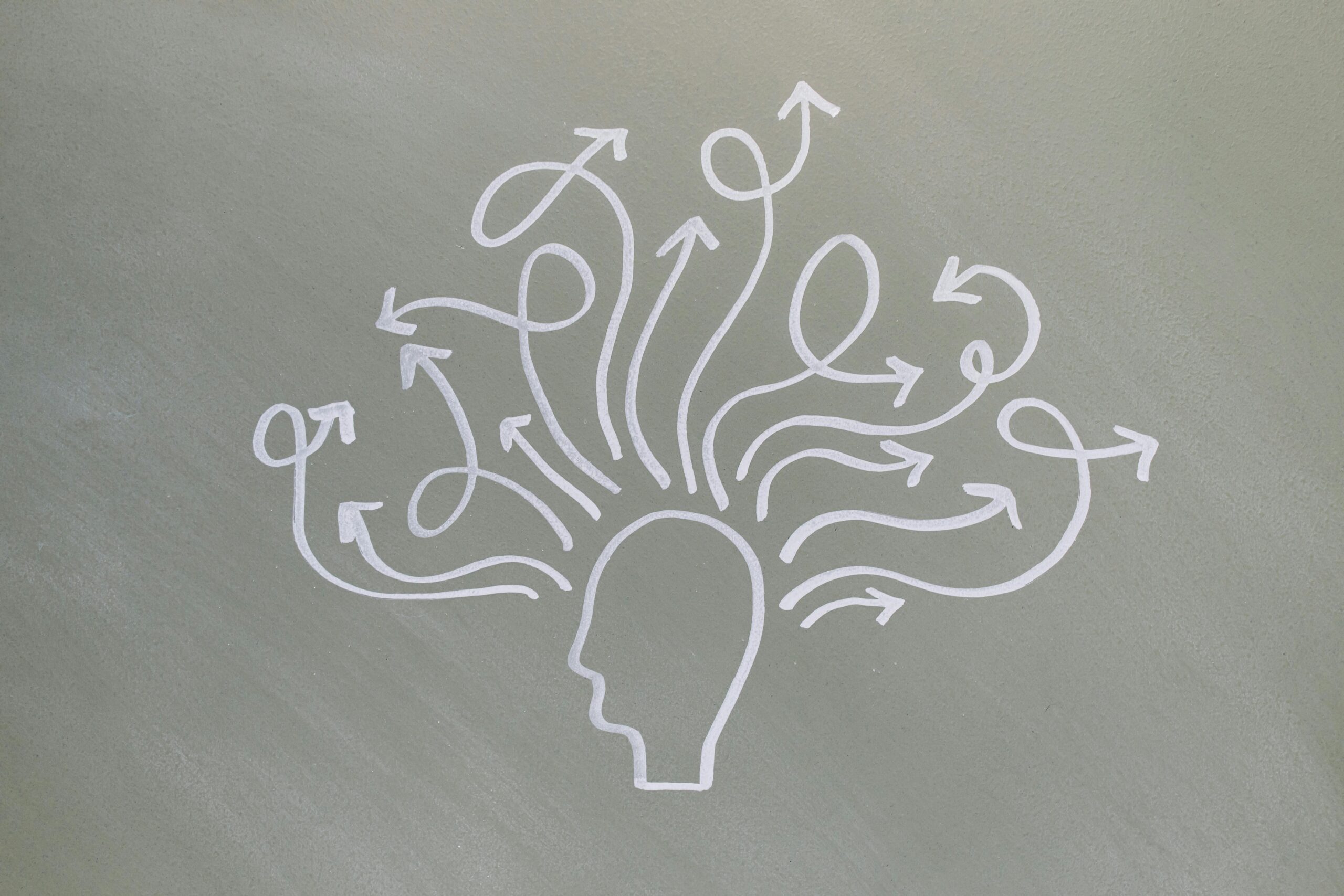
In today’s hyper-connected world, we’re drowning in data streams, notifications, and endless content feeds that promise knowledge but often deliver chaos instead.

The digital revolution has fundamentally transformed how we access, consume, and process information. What once required trips to libraries and encyclopedias now materializes instantly through our smartphones. Yet this unprecedented access comes with a hidden cost: our brains weren’t designed to handle the relentless tsunami of information that bombards us every waking moment.
Information overload isn’t merely an inconvenience—it’s a genuine cognitive crisis affecting productivity, decision-making, and mental wellbeing. Research suggests the average person encounters approximately 34 gigabytes of information daily, equivalent to consuming 100,500 words outside of work. This volume exceeds our natural processing capacity by orders of magnitude, creating what experts call “cognitive strain” and “decision fatigue.”
The filtering mechanisms that were supposed to help us manage this deluge have themselves become part of the problem. Algorithmic feeds, personalized recommendations, and artificial intelligence-driven content curation often trap us in echo chambers, amplify engagement over accuracy, and prioritize quantity over quality. Understanding these challenges and developing effective strategies to overcome them has become essential for anyone seeking clarity in the digital age.
🌊 Understanding the Anatomy of Information Overload
Information overload occurs when the volume of available information exceeds our capacity to process it effectively. This phenomenon isn’t entirely new—scholars complained about too many books even in ancient Rome—but digital technology has accelerated it exponentially. The consequences manifest in multiple dimensions of our lives.
Psychologically, excessive information consumption triggers stress responses similar to physical threats. Our brains release cortisol when facing too many choices or competing demands for attention. This constant state of alert depletes mental resources, reducing our ability to think critically, remember important details, and make sound judgments.
Professionally, information overload costs businesses billions annually through reduced productivity and poor decision-making. Knowledge workers spend nearly one-third of their day simply managing email, leaving less time for substantive work. The paradox is clear: we have more information than ever before, yet feel less informed and more confused about what truly matters.
The Multiplication Effect of Digital Platforms
Social media platforms have engineered environments specifically designed to maximize engagement and time spent. Every scroll, click, and swipe feeds algorithms that learn to serve increasingly compelling content. What appears as helpful personalization actually creates an addictive loop where novelty constantly beckons, preventing deep engagement with any single piece of information.
News cycles that once operated on daily rhythms now update by the second. Breaking news alerts interrupt our focus dozens of times daily, each demanding immediate attention while often lacking sufficient context or verification. This fragmented consumption pattern trains our brains to skim rather than read, to react rather than reflect.
🧠 The Neuroscience Behind Our Filtering Failures
Our brains evolved in environments where information was scarce and valuable. The cognitive mechanisms that helped our ancestors survive—quickly scanning for threats, prioritizing immediate rewards, seeking novel stimuli—now work against us in information-rich environments. Understanding these biological limitations is crucial for developing effective countermeasures.
The prefrontal cortex, responsible for executive functions like planning, decision-making, and impulse control, has limited processing capacity. Psychologists call this “working memory,” and it can typically hold only about four distinct pieces of information simultaneously. When we exceed this capacity, our performance deteriorates rapidly across all cognitive tasks.
Attention itself operates as a limited resource that depletes with use. Each decision, notification, and context switch consumes this finite supply. By afternoon, many people experience significantly reduced capacity for focused work, not from physical tiredness but from attentional exhaustion. This phenomenon explains why simple decisions feel overwhelming after a day of constant information processing.
The Illusion of Multitasking
Despite widespread belief in multitasking abilities, neuroscience reveals a different reality. Our brains don’t actually process multiple information streams simultaneously—they rapidly switch between tasks, incurring a “switching cost” each time. Research demonstrates that this constant switching can reduce productivity by up to 40% and increases error rates substantially.
The mere presence of our smartphones, even when turned off, measurably reduces cognitive capacity. One study found that participants whose phones were in another room significantly outperformed those whose phones sat face-down on the desk. This “brain drain” effect demonstrates how the potential for information access itself consumes mental resources.
⚙️ When Filters Fail: The Dark Side of Algorithms
Algorithmic filtering promised to solve information overload by surfacing relevant content while hiding the rest. Instead, these systems have created new problems that often worsen our relationship with information. Understanding how and why these filters fail empowers us to use them more consciously.
Most content algorithms optimize for engagement metrics—clicks, likes, shares, and time spent—rather than accuracy, importance, or user wellbeing. This creates perverse incentives where sensational, emotionally provocative, or polarizing content receives preferential treatment. The result is a distorted information diet heavy on junk food and light on nutrition.
Filter bubbles emerge when algorithms primarily show us content similar to what we’ve engaged with previously. While this seems efficient, it narrows our perspective, reinforces existing beliefs, and shields us from challenging or diverse viewpoints. Over time, this creates a warped sense of reality where our particular views seem universal and opposing perspectives appear rare or extreme.
The Recommendation Rabbit Hole
Recommendation engines on video platforms, shopping sites, and content aggregators guide billions of decisions daily. These systems excel at predicting what will capture our attention next but lack understanding of our deeper goals, values, or long-term interests. Following their suggestions often leads down unproductive pathways that waste time without delivering genuine value.
The autoplay feature perfectly illustrates algorithmic failure. By automatically queuing the next video, article, or episode, these systems bypass our natural stopping points—moments where we might reflect, decide, or disengage. This design removes friction intentionally, prioritizing platform metrics over user autonomy.
🛡️ Building Your Personal Information Defense System
Mastering information overload requires intentional strategies that work with our cognitive architecture rather than against it. The goal isn’t eliminating all digital information—that’s neither realistic nor desirable—but establishing sustainable practices that prioritize signal over noise.
Start by conducting an information audit. Track where you consume information, how much time each source demands, and what value it delivers. Many people discover they spend hours on sources that provide minimal benefit while neglecting higher-quality options. This awareness creates the foundation for meaningful change.
Implement aggressive filtering at the source. Unsubscribe from unnecessary email lists, unfollow social accounts that don’t serve your goals, and disable non-essential notifications. Each eliminated input reduces cognitive load and frees attention for what truly matters. Remember: saying no to good information creates space for great information.
The Power of Designated Information Time
Rather than constantly monitoring multiple information streams, batch your consumption into specific time blocks. Check email three times daily instead of continuously. Read news once in the morning rather than throughout the day. This approach transforms information consumption from an interruption-driven process to an intentional activity.
Create information-free zones in your day. Protect the first hour after waking and the last hour before sleep from digital information. Use these bookends for reflection, planning, or analog activities. Many successful individuals report that this practice dramatically improves their mental clarity and decision-making quality.
📱 Leveraging Technology to Fight Technology
Ironically, some of our best defenses against information overload come from technology itself. Numerous tools and applications help manage digital consumption, though choosing wisely is essential—adding too many management tools creates its own form of overload.
Focus-enhancement applications block distracting websites and apps during designated work periods. These tools range from simple timers to sophisticated systems that track productivity patterns and suggest optimal schedules. By creating friction between impulse and action, they help break automatic checking behaviors.
Read-it-later services like Pocket or Instapaper let you save interesting content for deliberate consumption rather than immediate distraction. This creates a buffer between discovery and consumption, allowing you to evaluate whether content truly merits your attention before investing time in it.
RSS readers provide an alternative to algorithmic feeds by delivering content chronologically from sources you explicitly choose. This returns control over information consumption to you rather than platforms, though it requires more active curation and management.
🎯 Developing Information Discernment Skills
No system or tool can replace human judgment in evaluating information quality. Developing strong discernment skills—the ability to quickly assess credibility, relevance, and value—is perhaps the most important competency for the digital age.
Practice lateral reading: when encountering new information, open additional tabs to verify the source, check other perspectives, and assess consensus among experts. This technique, used by professional fact-checkers, dramatically improves accuracy in distinguishing reliable from unreliable information.
Ask critical questions before consuming content: Who created this and why? What evidence supports these claims? What alternative explanations exist? Does this information change my understanding or just confirm existing beliefs? These questions slow down reactive consumption and engage analytical thinking.
The 80/20 Principle for Information
Apply Pareto’s principle to information consumption: roughly 20% of your sources likely provide 80% of your valuable insights. Identify your highest-yield sources and prioritize them ruthlessly. This concentration strategy delivers better results with less effort than attempting comprehensive coverage across numerous mediocre sources.
Similarly, recognize that most information has a short relevance window. Breaking news from yesterday rarely matters today. Social media debates vanish within hours. By allowing time to pass before consuming news, you benefit from better context, reduced volume, and natural filtering as truly important stories persist while trivia fades.
🌱 Cultivating Deep Work Practices
Deep work—sustained, focused attention on cognitively demanding tasks—represents the antithesis of information overload. Protecting and expanding your capacity for deep work creates competitive advantage while simultaneously reducing the appeal of constant information grazing.
Schedule deep work blocks of at least 90 minutes without interruption. During these periods, completely disconnect from email, messaging, and internet browsing. Initial sessions may feel uncomfortable as your brain protests the absence of stimulation, but capacity builds with consistent practice.
Structure your physical environment to support focus. Remove visible distractions, use noise-cancelling headphones, and consider working in locations without Wi-Fi access when possible. Environmental design powerfully influences behavior, making discipline easier and temptation harder.
🔄 Creating Sustainable Information Rhythms
Long-term success requires establishing rhythms that balance information consumption with creation, action, and rest. These patterns should feel sustainable rather than requiring constant willpower to maintain.
Implement regular digital sabbaticals—periods ranging from a few hours to full days where you disconnect completely. These breaks restore attentional capacity, provide perspective on what information truly matters, and often generate insights that constant consumption prevents.
Balance consumption with creation. For every hour spent consuming information, spend equal or greater time creating, applying, or teaching what you’ve learned. This ratio ensures information serves as raw material for meaningful work rather than becoming an end in itself.
💡 Embracing Strategic Ignorance
Perhaps the most counterintuitive strategy for mastering information overload is deliberately choosing ignorance in strategic areas. We cannot know everything, and attempting to do so guarantees mediocrity across all domains. Accepting this limitation liberates energy for depth in areas that truly matter.
Identify which topics, debates, and news categories you can safely ignore without negative consequences. For most people, celebrity gossip, distant political controversies, and viral social media trends fall into this category. Permission to ignore these areas feels uncomfortable initially but quickly becomes liberating.
Develop trusted intermediaries—people, publications, or curators whose judgment you respect—to monitor areas you care about but can’t actively follow. This delegation allows broader awareness without direct attention costs, though it requires investing time to identify truly reliable sources.

🎭 Reclaiming Your Attention and Autonomy
Information overload ultimately represents a battle for autonomy—your ability to direct attention according to your values rather than algorithmic optimization or social pressure. Winning this battle requires understanding that attention is your most valuable resource, more precious than time or money because it determines how you experience life itself.
The strategies outlined here—from neurological understanding to practical tools—work synergistically. No single approach solves information overload, but a personalized combination adapted to your specific circumstances can dramatically improve your relationship with digital information. Start small, experiment persistently, and adjust based on results rather than assumptions.
Remember that platforms, algorithms, and information producers have powerful incentives to capture your attention. They employ teams of psychologists, designers, and engineers specifically to make their products irresistible. Overcoming these sophisticated systems requires commitment, strategy, and community support. Connect with others pursuing similar goals, share techniques, and maintain accountability.
The digital age offers unprecedented opportunities for learning, connection, and creativity. Information itself isn’t the enemy—poorly managed information consumption is. By developing robust filtering mechanisms, cultivating discernment skills, and designing sustainable practices, you can harness digital tools’ benefits while protecting yourself from their costs. The goal isn’t returning to a pre-digital past but forging a post-digital future where technology serves human flourishing rather than undermining it.
Your journey toward mastering information overload begins with a single decision: acknowledging that the status quo isn’t working and committing to change. Each small victory—one disabled notification, one focused work session, one evening without screens—builds momentum toward lasting transformation. The overflow can be tamed, the signal can be separated from noise, and clarity can emerge from chaos. The question isn’t whether it’s possible, but whether you’re ready to begin.